

Clock Time
Four Darknesses, a Gen Z parable in the style of C.S. Lewis, Ch. 1

Dear Reader,
This story is a tribute to C.S. Lewis.
The table of contents:
Four Darknesses of Night
Clock Time
The Hour of Vespers
The Hour of Matins
The Hour of Lauds
I will publish one darkness at a time.
Enjoy!
Yours,
Amelia
Dedication:
To those who fret because of evildoers.
CLOCK TIME
Twilight was just touching the edges of campus. It had spread out from the lengthened shadows of the poplars, creeping from the tips of their upper branches to connect to the shadows of the tall buildings, until everything was submerged in gray, the colors dimmed to nothing. I scurried like a mouse along the wet sidewalks, bag full of books, my panting the only sound besides the ping-ping of water dripping from an unseen drainage pipe onto an unseen metal surface. My breaths appeared in white puffs and vanished like ghosts.
I was turning in a midterm paper. My professor’s office was 14 Johns Hall, in a stone building that smelled of coffee and old books. His name, “Dr. Allan Bergstrom #14,” stood out in thick font on the yellowed letterboard in the atrium, but there was no map, and so I wandered the dim halls, floorboards squeaking to the distant clunking of a tired radiator. The rectangular, motion-activated lights of the ceilings blinked on as I walked, and so the halls lit up before me, rectangle by luminous rectangle, leaving a trail of light.
As I continued to journey through the dark, I grew more and more worried I would never find Bergstrom’s door. Dishearteningly random objects littered the floors—crumpled-up pages torn from books, pencil stubs, broken chairs. I took another step into a new zone of motion-activated lights and stopped. On top of a pile of boxes sat a human skull.
I heard a voice, and a rumpled man with graying brown hair was striding towards me. “Is everything alright?”
“Professor Bergstrom.” I tried to hide the relief in my voice.
“Ah, Jeff’s skull.” He sighed. “I think he keeps it here on purpose to scare students away from office hours. I wish he would move his clutter out of the hall, but what can you say to a man two months away from retirement?”
I set my backpack on the floor and bent down to rummage in it. “I have the paper.”
“Why don’t you come in?” He motioned with a ballpoint pen to his door.
I followed him into an oasis of warm lamplight. I imagined the cross section of the building, a big black box divided into an endless array of smaller compartments, all cold and dark, and then just one little square in the grid lit up cheerily from within, and Dr. Bergstrom sitting in it at his desk, glasses sliding down his nose, oblivious to the interminable maze of empty cubes stretching away on every side.
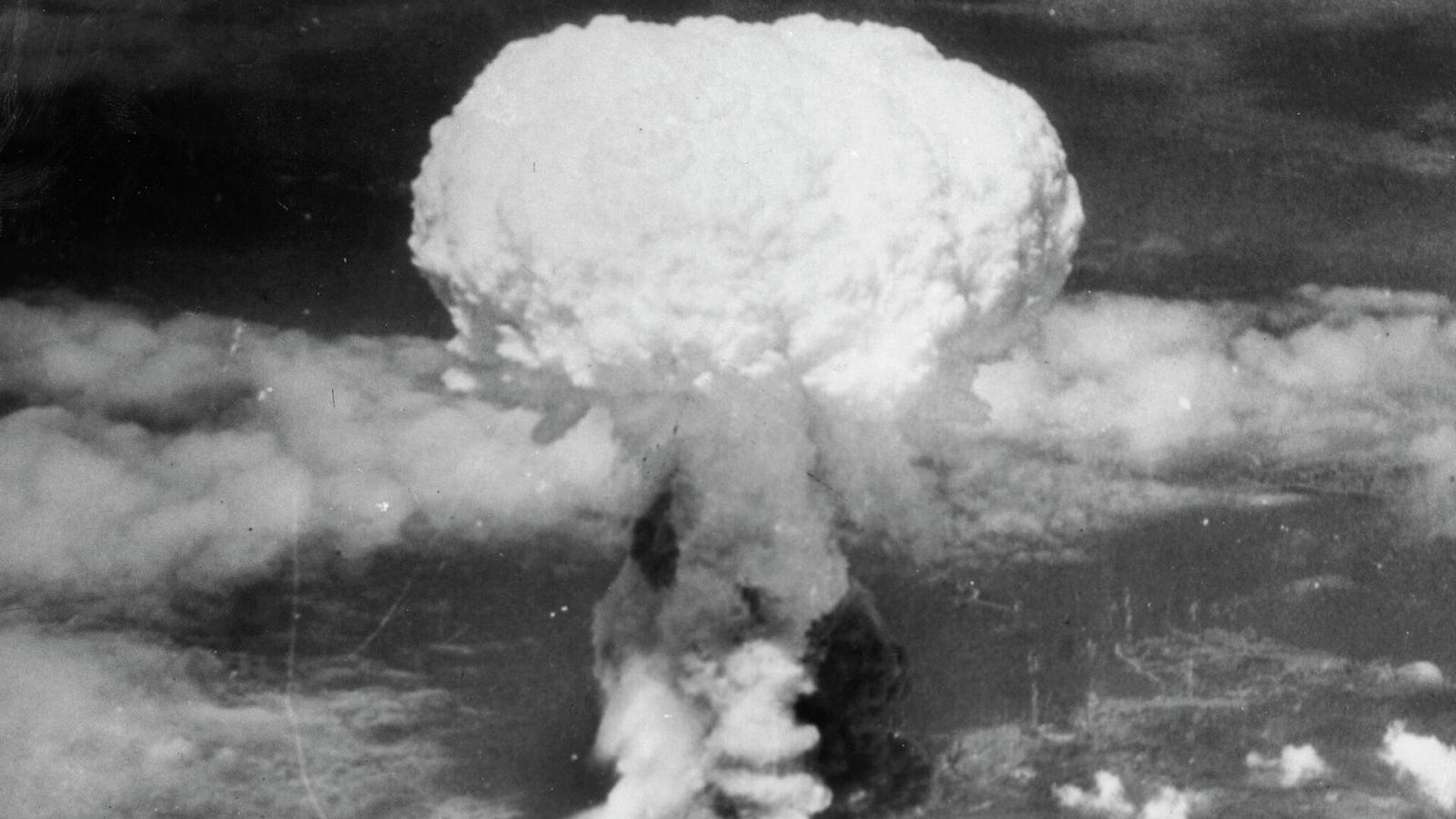
“Hiroshima,” he said, looking down at the paper on his desk. “How did you pull that out of baroque German literature?”
“I’m not off topic,” I said. “The way Grimmelshausen responded to the chaos brought on by the 100 Years War and the Black Death is similar to how some Japanese artists responded to the atomic bomb. And actually to German Trummerliteratur too. All catastrophes compounding on catastrophes. Humans treating one another like objects, or worse. You know, all the stuff we see everyday on the news. The gunshots, the terrorists, the human trafficking. It’s universal. The hopelessness of the world.”
His unruly eyebrows had sunk into a frown. I got the feeling I would not receive an A.
“Have a good weekend, Dr. Bergstrom.” I stood up.
“Are you doing alright?” he asked. “It’s been a rough few months for many students. There’s so little sunlight this far north. Beginning in the dark can be disheartening.”
I gave him a blank stare, irritated at his intrusion.
“Yes, I’m fine.” I knew how snarky I was being but went for it anyway. “Have you had a rough semester?”
He ignored my tone and opened a drawer in his desk. I stood frozen with my hand on the back of the chair, unsure whether to leave or stay.
“Have you heard of the Hiroshima ginkgos?” he said, at length. I shook my head, and he gestured to me to sit. “Do you have a minute?” He brought a box out of the drawer. “I have Saltines.”
The Saltines dissolved my irritation. It was such a professor’s snack, salty and dry, a meal for those so excited by intellectual excursions that they couldn’t bother to butter a slice of bread. I only touched Saltines when I had the flu, but Dr. Bergstrom appeared to relish them. He began to crunch them as he spoke.
“The ginkgo biloba is one of the oldest and most resilient trees on earth. Some call it a living fossil. At the time of the dinosaurs, there were many ginkgo-like species of tree. But now biloba is the only one of its kind.
“Asteroids smashed into earth’s crust and volcanoes exploded fire and ash into earth’s skies. An entire world gone. Think of all those things that died forever—dragonflies the size of eagles, 11-foot sea scorpions with arm-crunching claws, crocodiles the length of semi-trucks. The ginkgo lived among them.

“After disaster struck, the ginkgo awoke to a burnt-up world, its seedling emerging into an empty plain, struggling to reach its roots deep enough to find water, craning its fan-shaped leaves upward through the ash-thickened air to find the barest glimmer of sun.
“Back in the ginkgo’s youth, the world didn’t even have oceans and continents. Instead, it was a giant ocean, Panthalassa, surrounding one section of land, Pangea. Think about it. Since the ginkgo’s youth, enough time has passed that the Earth has shifted into seven continents, and all of its previous species have been wiped out and been replaced by things that didn’t exist back then. The change this tree has witnessed!”
Then he began to talk about the bomb.
Before I tell you what he said, you’ve got to understand something. I’ve been thinking about Hiroshima since the summer of sixth grade, when I read John Hersey’s book. There were many details in that book, but only one stuck with me. It’s an aside, only a paragraph long.
A priest hears voices in some bushes asking for water and walks over to find a group of men. They’re standing with their faces burnt off, hollow eye sockets, and the fluid from their melted eyes running down their cheeks. One of them says, “I can’t see anything.” The priest replies: “There’s a doctor nearby. He’s busy but he’ll come and fix your eyes soon, I hope.”
When I read that sentence, something flew out of me. “He’ll fix your eyes, I hope.” Their eyes were literally running down their cheeks. What was the doctor going to do? Collect the goo in a cup? The priest was selling them false hope, and he knew it.
Like I said, I’ve been thinking about Hiroshima for a long time. But back to Bergstrom.
“After the A-bomb went off in Hiroshima, pulverizing everything around it into fine, black ash, guess what survived?” Bergstrom paused for dramatic effect. “None other than a grove of ginkgo trees. They are still standing. You can go visit them today. They may live another two millennia.”
At this, I erupted. “How’s that supposed to fix anything? They’re fucking trees.”
He was quiet for a moment, and I felt my cheeks go red.
“I suppose it doesn’t fix anything at all,” Bergstrom said at last. “But it’s not quite fair to dwell on unexpected catastrophe without also acknowledging the unexpected victories. We may be unable to predict and halt evil. But we are just as often unable to predict and halt the good. It springs up in the most unlikely places, and all at once, in the twinkling of an eye, an entire world might be transformed. It’s possible.”
“Possible, but unlikely,” I said, and I turned to go.
“One cell of yeast in a vat of dough,” he said. “What could one cell do overnight in 32 million molecules of water and flour? One would think nothing. Yet this transformation is commonplace with the right ingredients at the right time. Have you ever tried sourdough bread?”
This was just the sort of metaphor I abhorred. But suddenly, I saw the gaping mouth of the shocked priest in Hiroshima, heard his momentary silence, then watched him look away from the burnt-out eyesockets of the injured men to stare at the skeletal remnants of a tree. The words came out of his mouth as ordinarily as if he were speaking to a sneezing parishioner. But his cheeks were pale and his lip trembled as he spoke. “The doctor will come and fix your eyes soon, I hope.”
“I hope.” It was an independent clause, a complete sentence in two syllables. As a thoughtless add-on, it made the priest sound weak and apologetic. But when you gave it the main emphasis in the sentence, it changed the meaning. Before the ginkgo tree showed signs of life, had the priest somehow sensed its tremors deep in the scorched earth, the sluggish sucking of nutrients up into roots?
“Bye, Professor,” I said. “Thank you.”
He called after me as I left, something vague and polite, and I nodded and gave him a tight smile. I left the building in a hurry via the same tortuous route by which I’d come. As I opened the front doorway, the last light blinked out. I was halfway across the shadowy campus when it began to rain.

I ran through the haze of the downpour down a path of evergreens to the nearest building. It stood white against the evening sky, the roof sloped at an angle so that the front of the building resembled a triangle.
The angles were all just barely wrong, almost otherworldly. Standing in the halo of light about the entrance, alone, with the raindrops pattering down on the pavingstones, I had an awful vision of being snatched away to a different planet this night, my disappearance growing cold as the world moved on without me. But the raindrops began to patter harder and faster, and I was growing cold. I pushed open the door.
It was dim inside and smelled like mold. I scanned a table covered in pamphlets beneath an archway of words: “The Office of Spirituality & Meaning Making.” One pamphlet, orange, had line-art of a smiling Confucius; the red one had a five-pointed star. Each was typed in font that short-haired, turtle-necked church ladies think “fun.” And there she was—I laughed to myself. A table-top sign holder introduced Dr. Ann Brickel as a queer Unitarian Universalist humanist Buddhist atheist. Even funnier was the pink-faced rector with the clerical collar. He looked so staid with his wire-rimmed glasses, and so utterly traditional, that I could not fathom the possibility of a working relationship between the two.
I wandered towards the pair of double doors to the sanctuary and pushed them silently open. A weak, green light shone through the rain-bleared windows, illuminating a wide, low-ceilinged room lined with pews.
On the altar sat a three-paneled altarpiece. Thinking a shadow had obscured its content, I padded down the aisle to take a closer look. But as I neared, I realized I had not been mistaken. Each panel was painted pitch black. Below, an inscription read, “To The Unknown God.”
Thunder crashed outside. It was a long walk back to my dorm, and I didn’t want my papers to get wet, but this might be a long wait. As I sat down, I reached into my back pocket for my phone. Its black, rectangular screen eerily resembled the black rectangles of the altarpiece. And it was dead. I was about to groan when I heard a nearby flutter, like the rustling of wings.
“Hello?” I said. “Is someone there?”
I waited. I heard nothing but the rain’s ceaseless pounding. But as I looked into the black painting, my gaze traveling from the center to the left, back through the center panel, and to the right, it seemed to steadily increase in size. Before I knew it, it had filled the entire room. I felt myself pulled forward into the paint until I was very small and the darkness was a towering wave.
The motion-activated lights blinked out, and everything went black.
To be continued…
I'm in! This is intriguing, right up my alley
I like how saltines are "a professor's snack". I exemplify that. I hope its not out of snobbery--- saltines are simple, and better for lots of occasions than fancier crackers.